Marek had ideas for apps. What he did not have was a clear way to turn those ideas into instructions a builder could use.
As someone new to vibe coding, he initially found Lovable intimidating. Being able to describe an app in everyday language was promising, but it still left him with questions. What should he ask for first? How much detail should he include? What should come next?
Working with Alia helped him approach those questions with more confidence.
“As a vibe coding beginner, I was overwhelmed with Lovable at first, but Alia is like a guiding angel extending a helping hand. With her, I feel much more confident building apps in Lovable, knowing she's got my back.”
For Marek, having guidance made it easier to get started. He could talk through an idea, break it into manageable parts and take a more focused instruction into Lovable.
Starting with a fitness app
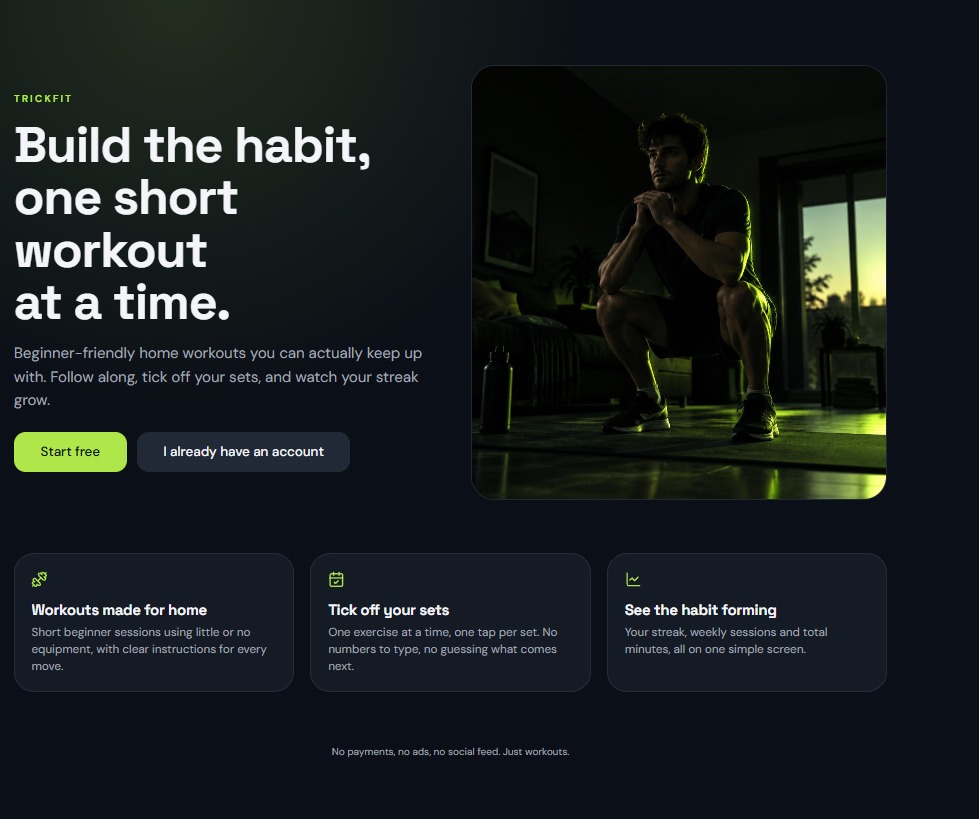
One of his projects was TrickFit, a home-workout app. In the material he shared, Alia organised the work into stages, beginning with a plan and later connecting the front end and back end. Marek used Lovable for the build.
That distinction matters. An app idea can sound simple until you try to describe how it should work. A fitness app needs more than an attractive opening screen. Someone has to decide what a person sees first, what happens when they choose a workout and what information the app needs to remember.
Breaking the work into stages gave Marek a way to approach those decisions. Instead of having to work out the whole project before writing his first prompt, he could focus on the next part.
The TrickFit screenshot above is from his shared project. It shows the direction of the build, rather than a promise that every feature has been independently tested.
Trying something he would not have known how to start
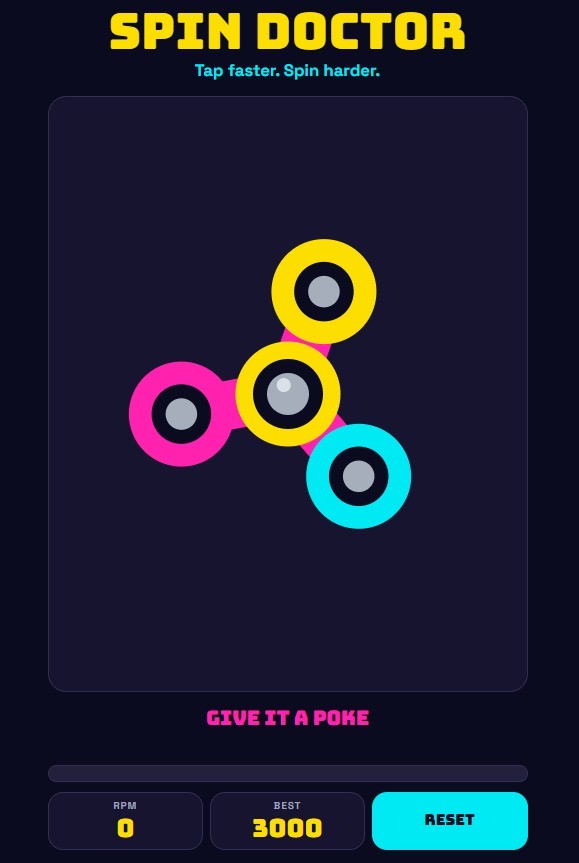
Marek also explored Spin Doctor, a simple game built in Lovable. Alia helped develop instructions for the tap-to-spin interaction, momentum, RPM display and reset behaviour.
Looking back on the experience, he said:
“Ten years ago, if I had been tasked with making a game similar to Spin Doctor, I wouldn't have even known where to begin. It probably would have taken days or weeks just to figure out what kind of software to use, let alone actually build it.”
He described the difference today as:
“Nowadays, with Alia, it’s just a matter of a few minutes and prompts to create a simple yet functional game”
Marek says he approached the project with no prior game development experience. His description is a personal account of this simple build, not a benchmark or a promise that every app can be finished in minutes.
What stands out is the change in his starting point. A project that once felt out of reach became something he could begin exploring.
Taking the same approach to other ideas
The projects Marek shared were not all alike. Alongside TrickFit and Spin Doctor, he explored a drone parts planner and a food website.
Tiny Whoop Builder
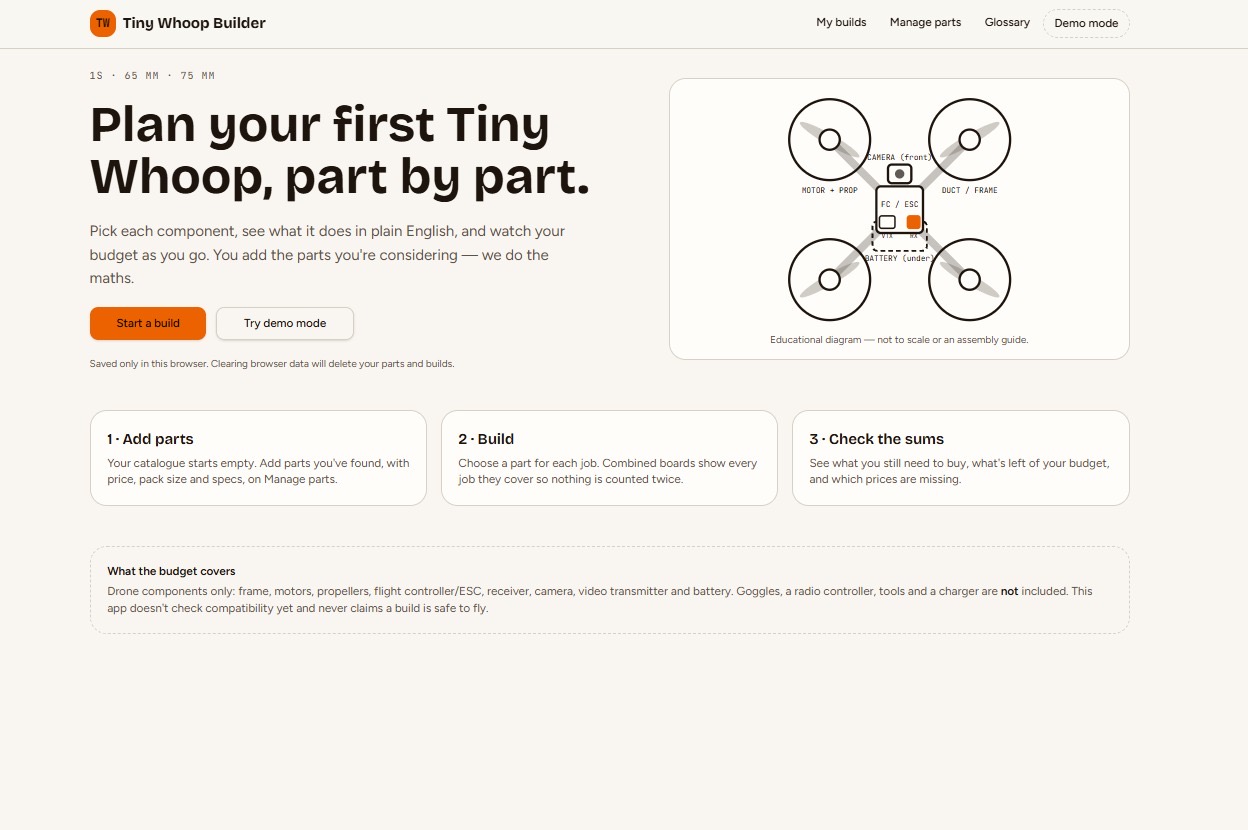
Tiny Whoop Builder explores a parts catalogue and budget-planning interface for a small drone build. Alia helped with prompts for organising the parts, presenting a budget and showing where information was missing.
The shared version uses demonstration parts and prices. It illustrates a planning idea; component compatibility and flight safety would need separate verification.
KURKUR
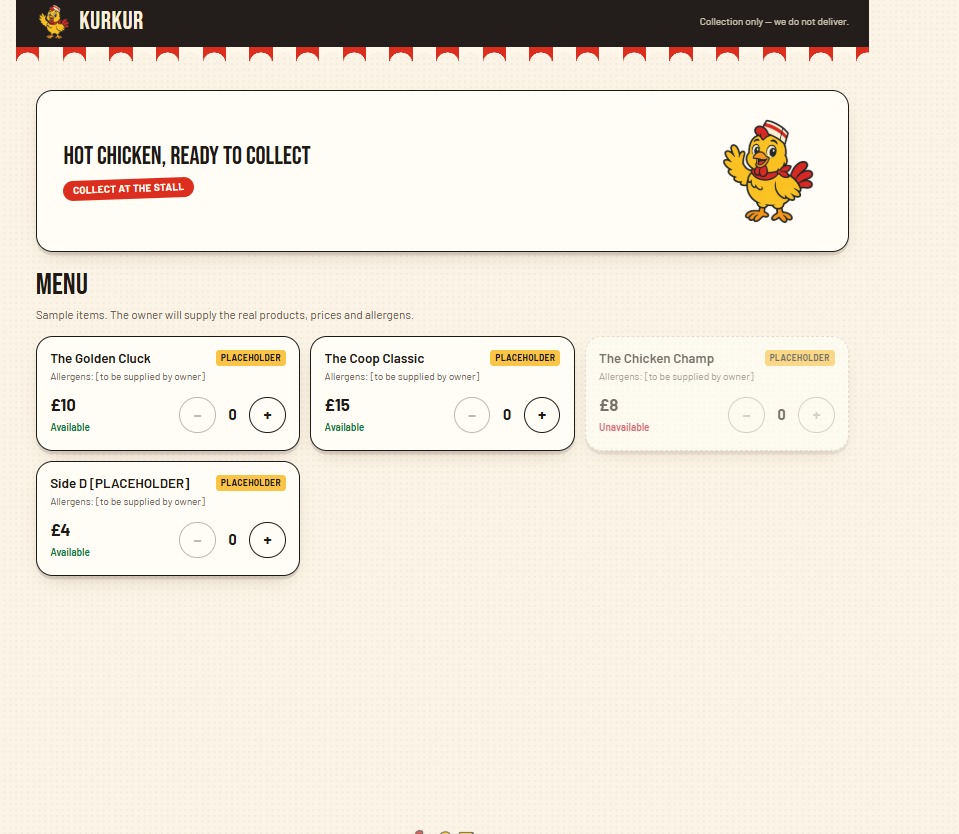
KURKUR explores a food-ordering website. Alia helped shape prompts around the menu, collection journey and visual refinements.
Here, the questions were about the customer's experience: finding something to order, understanding the next step and seeing the information needed to make a choice. The screenshot shows a website concept with sample products and prices, rather than a verified live ordering service.
Having an idea is only the beginning
Marek's experience highlights a part of vibe coding that can be easy to overlook. Even when a tool can generate an interface, a new builder still needs to decide what to ask for and how to judge the response.
Alia gave him a place to work through those decisions. He could develop a plan, take an instruction to his builder and return with questions about what came back.
That does not remove the need to test a build. Accounts, saved information, payments and other backend features still need to work beyond the screenshots. Alia can help explain the questions to ask and suggest checks, while the builder remains the place where changes are applied and tested.
For Marek, the immediate benefit was feeling less overwhelmed and more able to act on his ideas. His four projects show the range of things one beginner chose to explore with that support.
If you have an idea but are unsure where to start, read our introduction to vibe coding, use the first app brief template, or explore Alia's guided demo.